
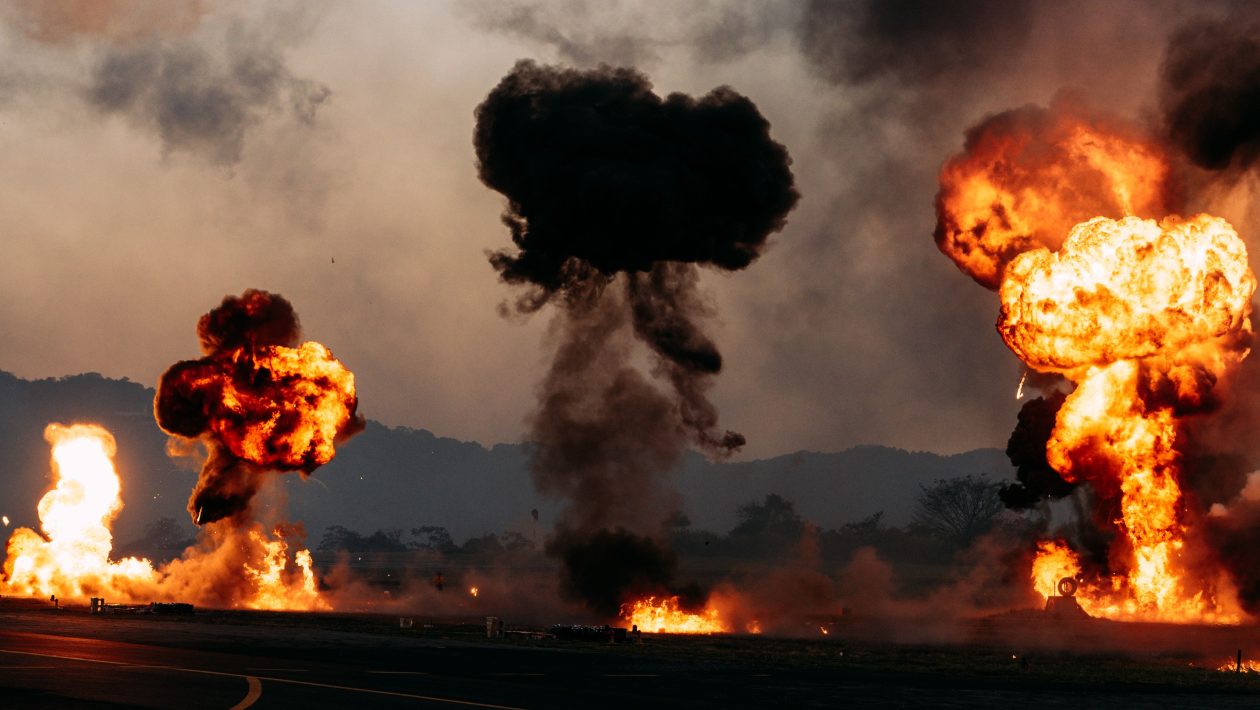
When something goes wrong a fire, a chemical spill, or a large public event that suddenly becomes dangerous the people in charge don’t only ask how big the problem is. They also ask how difficult it will be to manage. That is what incident complexity is about.
Several conditions can make an incident more difficult to handle, including safety risks, hazardous materials, weather, public attention, and the number of agencies involved. But not every factor affects complexity in the same way. Understanding the difference helps explain how emergency responders assess a situation and decide what kind of response is needed.
One important distinction is knowing which factor does not impact the complexity of an incident. And the answer says a lot about how emergency response actually works. This article breaks down what makes an incident complex, what doesn’t, and why that distinction matters.
What is Incident Complexity?
Incident complexity is simply a measure of how difficult a situation is to control. It’s not about how big the incident looks from the outside. A small fire in a chemical storage unit can be far more complex than a large fire in an open field, because the danger, the planning, and the coordination required are completely different.
A few things drive that difficulty up: how dangerous the situation is, how many people are at risk, how much attention it’s drawing, and how unpredictable it might become. The more of these pile on, the harder the incident is to manage.
A Simple Example of Incident Complexity
Imagine two incidents happening on the same day. The first is a small kitchen fire at a restaurant. Firefighters arrive, put out the fire, and leave the scene within a short time. There are no hazardous materials, no injuries, and no major public safety concerns.
Now consider a chemical spill on a busy highway during strong winds. Drivers may need to be kept away from the area, hazardous fumes may be spreading, traffic may need to be redirected, and several agencies may need to coordinate their response. The second incident is more complex because there are more risks and more things to manage.
Now change the amount of money available to the responding agency. Give the first incident a large budget and the second a small one. Does that change the nature of either incident?
No.
The kitchen fire is still relatively straightforward to manage, while the chemical spill still involves hazardous materials, traffic, weather, and public safety concerns. The situation creates the complexity; the budget does not.
Factors That Make an Incident More Complex
Several conditions can increase the difficulty of managing an incident. These factors can affect the decisions responders make, the number of resources required, and the amount of coordination involved
1. Safety Risks to the Public and Responders
This is usually the biggest factor. When people’s lives are at risk, whether that’s the public or the responders themselves, everything about the response slows down and gets more careful. More people are needed, more precautions are taken, and every decision carries more weight. A gas leak near a busy street is a lot harder to manage than the same leak in an empty lot, simply because of who’s nearby.
2. Hazardous Materials
Once chemicals, gas, or other dangerous substances are involved, the whole approach changes. Regular response steps aren’t enough anymore. Specialized equipment, protective gear, and careful containment all become necessary, and that adds real difficulty to the situation.
3. Weather and Environmental Conditions
Weather can turn a manageable incident into a dangerous one fast. Strong wind can spread a fire. Heavy rain can flood an area that was already hard to reach. When conditions on the ground are unpredictable, so is the response.
4. Political Sensitivity and Public Attention
This one is easy to overlook, but it’s real. When an incident draws media coverage or touches something politically sensitive, it becomes harder to manage — not because the physical danger changed, but because there’s now added pressure around how information gets shared and how quickly decisions need to be explained to the public.
5. Cascading Events
An incident can also become more complex when one problem creates another. For example, a fire could damage electrical equipment and cause a power outage. The outage could then affect traffic signals, communications, or nearby buildings. When one incident starts creating additional problems, responders have more issues to manage at the same time.
6. Multiple Jurisdictions or Agencies
Coordination becomes more difficult when an incident involves multiple agencies, departments, or jurisdictions.
A small local incident may be handled by one fire department or emergency service. A larger incident could require cooperation between fire services, police, emergency medical services, public works departments, utility companies, and other organizations. The more groups involved, the more communication and coordination may be required.
7. Resource Availability
The availability of personnel, equipment, and other resources can also affect how difficult an incident is to manage. If the resources needed to handle an incident are limited or already being used elsewhere, responders may have a harder time managing the situation. This is different from cost considerations. Resource availability concerns what is actually available for the response, while cost refers to the financial expense of that response.
So, Which Factor Does Not Impact the Complexity of an Incident?
The factor that does not directly determine incident complexity is cost considerations of responding agencies.
Cost is important to emergency management, but it measures something different from complexity. Think about it this way: Complexity asks: “How difficult is this incident to manage?”
Cost asks: “How much money will it take to respond to this incident?”
Those are two different questions. A chemical spill can be highly complex even if the response costs relatively little. Likewise, a simple incident could become expensive because responders have to travel a long distance, use specialized equipment, or maintain the response for an extended period. Therefore, the amount of money spent does not automatically tell us how complex an incident is.
Why Cost Does Not Determine Incident Complexity
It is easy to assume that an expensive response must involve a highly complex incident. However, cost and complexity are not the same thing.
Suppose a small incident occurs far away from the nearest emergency resources. Responders may have to travel a long distance, bring equipment from another location, or keep personnel on duty for an extended period. The response could become expensive even though the incident itself is relatively simple.
On the other hand, a dangerous chemical incident could require complex planning and coordination even if the financial cost of the initial response is low. The danger and difficulty of the situation remain the key issues.
Money can affect how a response is supported, but it does not change the underlying conditions of the incident. A fire does not become less dangerous because an agency has a larger budget. A chemical does not become less hazardous because more funding is available. The incident itself remains the same.
How Incident Complexity Affects Emergency Response
Understanding complexity helps emergency managers determine how an incident should be handled. A straightforward incident may only require a small number of responders and a simple command structure. A more complex situation may require additional personnel, specialized teams, multiple agencies, and more detailed planning.
As complexity increases, responders may need to spend more time coordinating activities, sharing information, managing safety concerns, and planning for what could happen next. This is why assessing the situation comes before deciding what resources are needed.
How Incident Types Relate to Complexity
The Incident Command System uses incident types from Type 5 to Type 1 to describe different levels of incident management complexity.
- Type 5: Generally the least complex incidents, usually handled with local resources and a small number of responders.
- Type 4: More demanding than a Type 5 incident and may require additional personnel or coordination.
- Type 3: Requires greater management and coordination and may involve resources from outside the immediate area.
- Type 2: A highly demanding incident that generally requires significant resources and a larger management structure.
- Type 1: The most complex type, requiring extensive resources, coordination, and management capabilities.
These types help agencies understand the level of management and resources an incident may require. Importantly, an incident is not classified at a higher level simply because it costs more money. The characteristics of the incident and the management requirements are what matter.
Why This Matters in Real Situations
This isn’t just a technical detail. It affects how responders think when they’re on the scene. If someone treated a tight budget as a sign that a situation is “less serious,” they could end up underestimating a genuinely dangerous incident. That’s a real risk, especially for smaller agencies with limited funding but no shortage of dangerous situations to respond to.
The safer approach and the one responders are trained to follow is to judge the incident based on what’s actually happening, then figure out the resources needed afterwards. Complexity comes first. Cost comes second.
A Quick Way to Judge Complexity Yourself
If you ever want to gauge how complex a situation is whether you’re studying this topic or just trying to understand a news story about an incident ask these questions instead of looking at the price tag:
- Is anyone’s safety at immediate risk? More risk means more complexity.
- Are hazardous materials involved? Chemicals, gas, or toxic substances raise the difficulty right away.
- Could weather make it worse? Wind, rain, or extreme heat can change the situation fast.
- Is it drawing public or political attention? More eyes on a situation means more pressure on how it’s handled.
- Could it trigger other problems? One issue causing a second one adds difficulty on top of the original.
Notice that “how much will this cost” isn’t on that list. If your instinct is to ask about budget first, that’s a sign to redirect the question toward what’s actually happening on the ground instead.
Wrapping Up
Incident complexity comes down to what’s actually happening on the ground: the safety risks, the hazards, the weather, and the public or political pressure surrounding it. All of these shape how hard a situation is to manage. Cost doesn’t. That’s exactly why, when people ask which factor does not impact the complexity of an incident, the answer points to the funding side of a response rather than any real condition of the incident itself.
Understanding this helps make sense of how responders actually approach emergencies: look at the situation first, then figure out the resources it takes to handle it.
Frequently Asked Questions (FAQs)
Q1. What factors make an incident more complex?
Factors such as safety risks, hazardous materials, weather conditions, cascading events, multiple jurisdictions, resource availability, and political or public attention can make an incident more difficult to manage.
Q2. Which factor does not impact the complexity of an incident?
Cost considerations of responding agencies do not directly determine incident complexity. Cost relates to the financial side of the response rather than the difficulty of managing the incident itself.
Q3. Does cost have any role in emergency response?
Yes. Cost can affect budgeting, resource planning, equipment purchases, and how long a response can be sustained. However, it does not determine how complex the incident is.
Q4. Can a small incident be more complex than a large incident?
Yes. Size alone does not determine complexity. A small incident involving hazardous materials or serious safety risks may require more planning and coordination than a larger but straightforward incident.
Q5. What is the difference between incident complexity and incident type?
Incident complexity describes how difficult an incident is to manage. Incident types provide a way to categorize the level of management and resources generally required to handle the situation.